The New Education Ecosystem: Why Learning No Longer Stops When School Ends
How supplemental education is evolving from tutoring into long-term skill development
For many parents, education used to follow a simple formula.
Children went to school, completed their homework, prepared for exams, and gradually moved through the educational system.
Today, that formula is changing.
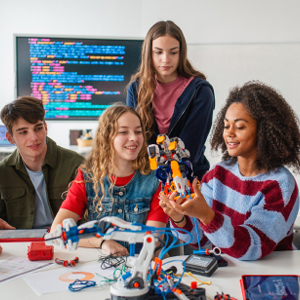
Increasingly, parents view education not as something that happens only inside a classroom, but as an ongoing ecosystem designed to build confidence, develop critical skills, and prepare children for an increasingly complex future
.
This shift is quietly transforming one of the fastest-evolving sectors within franchising: supplemental education.
Tutoring Is No Longer Remedial
For years, tutoring carried a stigma.
Many families associated it with students who were struggling academically or trying to catch up with classmates.
That perception has changed dramatically.
Today, supplemental education often begins long before academic difficulties appear. Parents increasingly view enrichment programs as proactive investments rather than corrective measures.
The goal is no longer simply improving grades.
The goal is building stronger learners.
This includes developing:
- confidence
- study habits
- critical thinking
- independent learning skills
- long-term academic success
As competition increases and educational expectations evolve, many families seek additional support systems that complement traditional schooling.
Parents Are Investing Earlier
Another noticeable shift is timing.
Parents are no longer waiting until middle school or high school to introduce enrichment programs.
Many begin much earlier.
They recognize that early exposure to structured learning environments can help children develop foundational skills that benefit them throughout their educational journey.
This trend is helping expand the role supplemental education centers play within communities.
Personalization Is Becoming Essential
One of the biggest changes within education is personalization.
Children do not all learn the same way, at the same pace, or through the same methods.
Families increasingly seek environments that can adapt to individual learning styles while maintaining structured academic standards.
Concepts such as Best in Class Education Center reflect this evolution by combining structured academic programs with individualized learning approaches designed to build confidence and long-term success.
This model aligns with a broader consumer trend that extends far beyond education itself: personalization.
Consumers increasingly expect experiences tailored to their individual needs, and education is no exception.
Building Confidence Beyond Academics
One of the biggest misconceptions surrounding supplemental education is that it focuses exclusively on grades.
In reality, many programs are increasingly focused on confidence.
Confidence often becomes the bridge between knowledge and performance.
Students who develop stronger confidence levels often become:
- more engaged learners
- better communicators
- more willing to ask questions
- more resilient when facing challenges
These qualities frequently extend beyond the classroom.
Education Is Becoming a Lifelong Process
Perhaps the biggest shift of all is philosophical.
Education is no longer viewed as a finite process that ends with a diploma.
Parents increasingly recognize that lifelong learning may become one of the most valuable skills children can develop.
The world children will eventually enter is changing rapidly.
Technology, artificial intelligence, and new industries continue to reshape the skills employers will value in the future.
This reality is encouraging families to focus less on memorization and more on learning agility.
The ability to adapt may become one of the greatest competitive advantages children can develop.
Why This Matters for Franchising
From a franchising perspective, education continues to be an attractive category because it addresses a long-term need rather than a temporary trend.
Parents consistently prioritize investments that support their children’s future.
Unlike many consumer categories, education often carries emotional value alongside practical value.
Parents are not simply purchasing a service.
They are investing in opportunity.
The Bigger Picture
The future of education will likely become increasingly collaborative.
Traditional schools will remain central, but they may increasingly be supported by ecosystems of enrichment, personalized learning, and skill development programs that help children thrive.
Education no longer stops when school ends.
And that shift may define the next generation of learning.
About the Author
Ozzie Grupenmager is a franchise consultant with Franchise Consulting Company and founder of NextGen Business Solutions, a business coaching and franchise advisory firm. A former COO in the franchise industry and CIO at a global advertising network, he built a franchise system from the ground up as a franchisor. His background spans franchise development, multi-unit operations, branding, marketing strategy, and business intelligence. Ozzie advises entrepreneurs, investors, and emerging brands on franchise ownership, operational systems, business growth, and scalable expansion strategies.