
The Wellness Evolution: Red Light Therapy & Pilates
A modern guide to understanding two of the fastest-growing sectors in the wellness industry
Over the years, I’ve joined five different Pilates studios and experienced more red light saunas than I can count. While I could clearly feel differences between Pilates machines and class styles, I remained curious about the specific benefits behind each variation. The same applied to red light therapy—some sessions felt noticeably more intense than others, raising a key question: does that mean stronger, better, or simply different?. Understanding these distinctions is critical, especially as both categories continue to gain traction among consumers and investors alike.
In today’s fast-growing wellness industry, red light therapy and Pilates-based fitness stand out as two of the most in-demand segments. Both promise measurable, transformative results, yet the underlying differences in technology, equipment, and execution can significantly impact outcomes. A clear understanding of these variables is essential for making informed decisions—whether as a consumer or an investor.
Illuminating the Benefits of Red Light
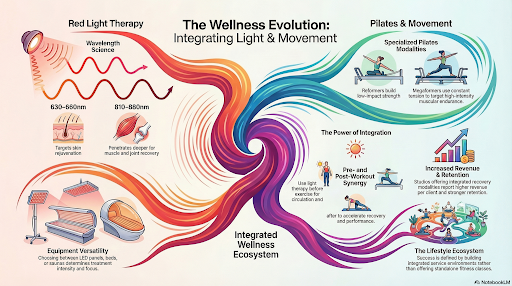
Red light therapy has rapidly established itself as a core offering in modern wellness environments, delivering benefits that range from skin rejuvenation to muscle recovery and inflammation reduction. However, not all systems produce the same results. The effectiveness of red light therapy is driven by the specific wavelengths emitted and how deeply they penetrate the body. Red light in the 630–660 nanometer range primarily targets the skin’s surface, supporting collagen production, anti-aging, and overall skin tone improvement. Near-infrared light, typically between 810–880 nanometers, penetrates deeper into muscles and joints, where it plays a role in recovery, pain relief, and inflammation reduction. Far infrared, commonly used in sauna formats, operates through heat rather than light penetration, stimulating circulation, detoxification, and relaxation.
The type of equipment used further differentiates the experience. LED panels are the most common and versatile systems, allowing for both targeted and full-body exposure. Red light beds provide a more immersive, full-body treatment, often positioned as a higher-end experience within wellness studios. Infrared saunas, while frequently grouped into the same category, are primarily heat-based, although many newer models incorporate red light for a hybrid approach. The key factors that determine effectiveness include wavelength accuracy, power output (irradiance), treatment time efficiency, and whether the system integrates complementary therapies. As a result, two devices that appear nearly identical can deliver significantly different outcomes.
Beem sets itself apart in this space by delivering full-spectrum infrared (which includes near, mid, and far wavelengths) combined with red light technology. Unlike competitors that isolate far infrared or red light treatments, Beem's integrated approach allows for deeper tissue penetration and a broader array of therapeutic benefits. A major differentiator for the brand is its ability to merge multiple therapies into a single room session. Furthermore, Beem provides a highly technology-driven experience by outfitting rooms with smart features and tablets that stream curated branded content, such as music, meditation, or wellness education. This modern setup creates a distinct competitive advantage over traditional, lower-tech sauna models and strongly appeals to a tech-savvy demographic of younger, urban professionals.
The Evolution of Pilates
Pilates, similarly, has evolved far beyond its boutique fitness origins into a scalable and highly profitable segment of the wellness industry. Its growth is largely driven by the diversity of equipment and training methodologies available. The reformer remains the most widely recognized apparatus, utilizing springs, pulleys, and a sliding carriage to deliver low-impact, full-body workouts that build strength and flexibility. The Megaformer, associated with the Lagree Method, intensifies this approach through slow, controlled movements and constant tension, targeting muscular endurance at a higher intensity. The Cadillac, or trapeze table, serves a more specialized role, often used in rehabilitation and advanced training settings. Chair and barrel systems add further variation, enhancing both progression and program diversity.
The rapid expansion of Pilates studios can be attributed to several factors. Its low-impact nature makes it accessible to a broad demographic, while the visible results drive strong client retention. Additionally, the elevated, boutique-style experience supports premium pricing models. Studios that incorporate complementary recovery modalities alongside Pilates consistently report higher retention rates and increased revenue per client, indicating a shift toward more integrated wellness offerings.
Pilates Addiction positions itself as a bold evolution of the traditional Pilates studio by operating a modern, scalable boutique fitness franchise model. Rather than sticking strictly to conventional methods, the brand sets itself apart by blending classical Pilates principles with contemporary athletic training. A major differentiator for the brand is its focus on HIIT-style Pilates (High-Intensity Interval Training), delivering heart-pumping, precision-focused workouts that fuse "intensity with integrity" to challenge and transform clients. This dynamic, high-energy approach is specifically engineered to appeal to a younger demographic seeking a more intense, modernized fitness experience compared to traditional offerings.
Building Integrated Ecosystems
The convergence of red light therapy and Pilates represents a particularly compelling opportunity. Studios that combine these services create a comprehensive wellness experience that extends beyond traditional fitness. Red light therapy can be used before workouts to enhance circulation and prepare muscles, and after workouts to accelerate recovery, reduce soreness, and improve overall performance outcomes. The added aesthetic benefits, including improved skin health and body toning, further enhance the value proposition. This integration transforms a single-service offering into a full-spectrum lifestyle experience, aligning with the expectations of today’s wellness consumer.
The broader trend within the wellness industry is clear: success is increasingly defined by the ability to build integrated service ecosystems rather than standalone offerings. A detailed understanding of technology, equipment, and client experience enables operators and investors to differentiate their positioning, increase perceived value, and maximize revenue streams. As the market continues to evolve, the most successful concepts will be those that effectively combine science, experience, and strategic execution.
About the Author
Paulette Callender is a seasoned franchise entrepreneur and business development leader with more than 20 years of experience helping businesses grow through strategic expansion, operational excellence, and strong franchisee partnerships. Her background includes multi-unit ownership, real estate strategy, P&L oversight, and mentoring entrepreneurs through every stage of business growth. Contact Paulette at pcallender@thefranchiseconsultingcompany.com.