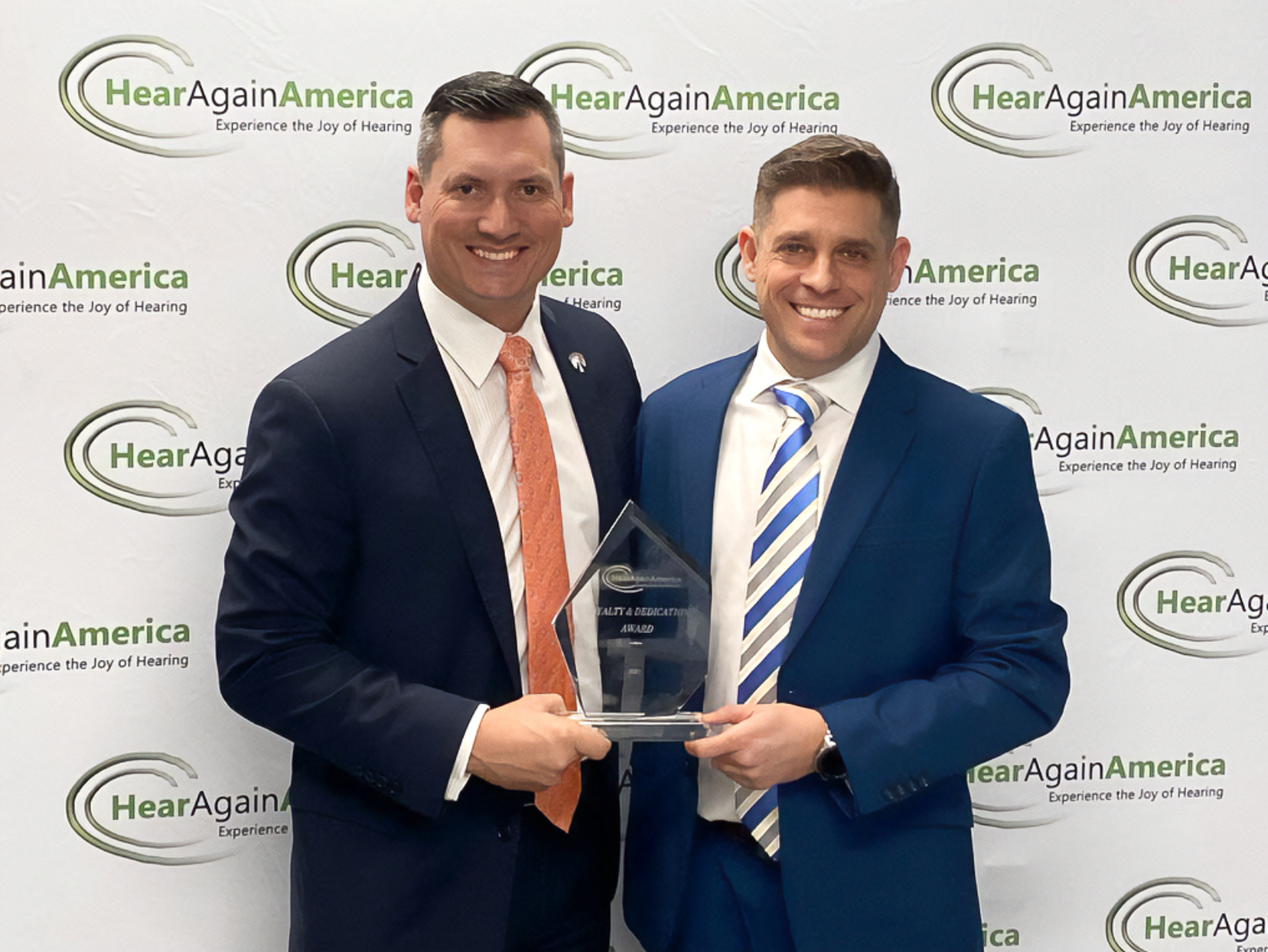
Hear Again America: A Vision for Better Hearing, Better Lives

Ann Power • September 1, 2025

"We’re not just in the hearing aid business—we’re in the life-changing moments business."

– Dr. Robert Morrison


The First Laugh

When 72-year-old Joan Miller walked into Hear Again America, she hadn’t clearly heard her granddaughter’s giggle in years. The sound had become a faint murmur, something she could only imagine. After her fitting, Dr. Robert Morrison asked her granddaughter to say hello. The little girl laughed instead—bright, clear, and unfiltered. Tears streamed down Joan’s face.


“That,” Morrison recalls, “is why we do what we do.”


Moments like these are the heartbeat of Hear Again America, a company founded on the belief that hearing care is more than a medical service—it’s a lifeline.


A Calling, Not Just a Career

For Asaf Peled, the hearing health profession was never just a job. Beginning in 2002 as a licensed hearing aid dispenser, he quickly recognized that untreated hearing loss wasn’t merely an inconvenience—it was a barrier to relationships, work, and self-confidence.


While serving as Regional Manager of Total Hearing Care in New Jersey, Peled built clinics from the ground up, each with a singular focus: patient care comes first. By the time he co-founded Hear Again America in 2013, he had a clear mission: to change the way hearing care was delivered.

“The heart of this company is empathy,” Peled says. “Every patient is someone’s parent, spouse, child, or friend. If we can help them hear again, we’re helping them live again.”


His leadership ensures that staff treat every patient as an individual, not a chart entry. Technology is chosen for its ability to enhance life, not just for its features. It’s a philosophy that has made Hear Again America a trusted name in every community it serves.


The Clinician Who Saw the Bigger Picture

Dr. Robert Morrison’s journey began with hands-on patient care. With degrees in Speech and Hearing Sciences from Ithaca College and a Master’s and Doctor of Audiology from Indiana University, he treated patients in Washington, D.C., before moving into leadership roles that allowed him to affect change on a broader scale.


As an early executive in a start-up hearing aid company, he helped expand into nine states with 30 locations. Later, with Starkey Laboratories, he became one of Florida’s most respected industry voices, blending technical expertise with an understanding of what truly matters to patients.


When he joined Hear Again America as President in 2016, Morrison brought both clinical credibility and a visionary outlook. “Hearing care is about restoring connection—between spouses, between grandparents and grandchildren, between friends,” he says. “Every time we fit a hearing aid, we’re rebuilding bridges that might otherwise crumble.”


Visionaries on a Mission

Peled and Morrison aren’t content to run a successful company—they want to change the national conversation about hearing health. They see it as a public health priority, one with ripple effects on mental health, cognitive function, and quality of life.


They speak often about the human cost of untreated hearing loss: the isolation, the frustration, the quiet withdrawal from social life. Rather than accept it as inevitable, they’ve built Hear Again America into a network designed to make care accessible, affordable, and deeply personal.

For them, success isn’t just about market share—it’s about lives changed.


Franchising with Heart

The decision to franchise Hear Again America was strategic but deeply mission-driven. By empowering local owners to operate under the Hear Again America brand, they could extend their patient-first philosophy into more communities while maintaining quality.


Leading this initiative is Mary Catherine McDonald, Vice President of Franchise Development. With more than 20 years in audiology business development and franchise leadership, she ensures expansion is measured and values-driven.


“Our franchisees aren’t just business owners,” McDonald says. “They’re ambassadors for our mission. They have to care about people as much as they care about profitability.”


Standing Apart in a Crowded Field

In a marketplace where hearing aids can be bought at big-box retailers or online, Hear Again America stands apart by preserving the private practice model. Patients see the same provider over time, receive personalized adjustments, and get ongoing support.


This continuity is intentional. Peled and Morrison understand that hearing aids are not one-size-fits-all solutions. They require professional fitting, fine-tuning, and a relationship built on trust.


Caring for the Whole Person

Both founders have long advocated for a holistic approach to hearing care. Research has now confirmed what they’ve witnessed firsthand: untreated hearing loss can lead to depression, cognitive decline, and diminished social engagement.


Hear Again America clinics go beyond fitting devices. They educate families, counsel patients, and create individualized care plans. They treat the person, not just the condition.


The Human Impact

The stories emerging from Hear Again America are proof of their impact. A veteran hears his wife’s voice clearly for the first time in a decade. A choir member returns to singing without fear of missing her cue. A businessman reenters the boardroom with renewed confidence.


“Every life we touch reminds us why we’re here,” Morrison says. “We’re not just restoring sound—we’re restoring joy.”


Looking Forward

Peled and Morrison are optimistic about the future of hearing care. With devices becoming smaller, smarter, and more connected, Hear Again America is ready to guide patients through the technology while keeping service deeply personal.


Their expansion will continue, but deliberately—prioritizing the right people and the right communities over rapid growth.


Conclusion: Leaders with a Legacy

In an age when healthcare can feel impersonal, Asaf Peled and Dr. Robert Morrison have built something rare: a thriving business rooted in compassion, vision, and humanity. They are not just executives; they are advocates, educators, and humanitarians.


Their mission is simple yet profound: restore hearing, rebuild connections, and enrich lives. As Hear Again America continues to grow, one thing is certain—its greatest measure of success will never be found on a spreadsheet. It will be found in the laughter, conversations, and shared moments of the people who, thanks to them, can truly hear again.


About the Author

Ann Power has over 25 years of experience in franchising. She offers a unique perspective when engaging with those looking to take the leap into franchise ownership. Ann focuses on helping individuals discern whether franchising might be a good fit for their future – both financially as well as meeting their lifestyle objectives. Contact Ann at APower@TheFranchiseConsultingCompany.com.


By Alex Neonakis December 1, 2025
Technology is everywhere in my life. It follows me from the moment I wake up and check my phone, to the AI-powered tools I use in school, to the way I stay connected with my friends. My generation grew up with instant answers, instant notifications, and instant expectations. Every part of our lives is shaped by a digital layer that older generations didn’t have. For us, technology isn’t something new. It’s the water we swim in. But here’s the truth I’ve come to understand: for all the innovation, all the speed, and all the automation, the basic parts of life don’t change. They can’t change. The world still needs people to take care of the things that really matter — the things that keep our homes, families, pets, and communities running. And this is where entrepreneurship becomes more important than ever. Even as a high-school senior, I see it clearly. If your toilet leaks, no app in the world can crawl under the sink and fix it. If your trash piles up, no AI can haul it away. If your dog needs a bath, and you don’t want your entire house flooded, someone has to roll up their sleeves and do it. Technology can help schedule the appointment, track the route, and process the payment, but the actual service — the real work — takes a human being standing in front of you. That’s the part people forget when they talk about AI replacing everything. They picture robots doing all our jobs. But most of the jobs that matter day to day are local, physical, and personal. They happen in real places with real people. They’re the backbone of every community. My dad works in franchising, so I’ve grown up seeing how entrepreneurship solves problems at a human level. What I’ve noticed is that the most successful entrepreneurs aren’t the ones trying to chase trends or invent the next big social app. They’re the ones who look around their neighborhoods and pay attention. They’re the ones who realize that families still need clean homes, working air conditioning, mowed lawns, safe pet care, reliable food options, and people who actually show up when something breaks. No matter how advanced technology becomes, people still live in physical spaces with physical needs. That’s why service businesses are powerful. They’re tied to essentials. They’re tied to real life. My generation is often told we’re obsessed with screens, and maybe that’s true sometimes. But I also think we understand something important: we want to build lives with meaning. We want to create. We want flexibility. We want to feel ownership over our time and our future. When I look at the entrepreneurs who inspire me, whether they’re in home services, food, fitness, pet care, or property maintenance, they share the same trait: they solve problems that can’t be ignored. If the water stops running, people want a solution now. If the basement floods, someone has to come. If a storm knocks down a tree, someone has to remove it. You can’t download a plumber. You can’t livestream a junk removal crew. You can’t automate compassion when someone’s elderly parent needs in-home support. At some point, technology steps aside and the human being steps in. That’s why local entrepreneurship is so powerful and so lasting. It exists where technology cannot replace the human touch — judgment, empathy, trust, skill, and presence. And when you combine that human element with smart tools, the possibilities become even bigger. Technology can make entrepreneurs more efficient. It can eliminate wasted time. It can help them schedule smarter, market better, hire faster, and serve customers more consistently. But it can’t replace the essence of their work. It can only highlight it. In the next decade, I believe the most important businesses won’t be the flashiest or the most digital. They will be the ones that solve real daily needs with a combination of tech and human reliability. Entrepreneurship will grow the most in the areas where life happens: in homes, hospitals, kitchens, gyms, neighborhoods, and local communities. People talk about AI taking jobs. I think AI will change jobs. But the work that really matters — the work that keeps society functioning — will always come back to people who are willing to help, build, fix, serve, and create. My generation has a huge opportunity in this. We’re growing up understanding technology instinctively, but we’re also grounded enough to see where it falls short. Entrepreneurship is the bridge between those two worlds. It lets us take the efficiency of technology and apply it to the basic needs that will never go away. It gives us a chance to shape our communities, solve problems for our neighbors, and build something of our own. As I get closer to college and start thinking about my future, this is what excites me most. Technology may define the era, but people define the outcome. And as long as there are real-world needs that must be met locally, there will always be room — and demand — for entrepreneurs who show up. The tools will evolve. The apps will change. The algorithms will get smarter. But the basics of life remain the same. Water has to run. Trash has to be removed. Pets need care. Homes need maintenance. Families need support. Wherever there is a need, there is an opportunity. And that’s the story I think my generation is ready to write — not one where technology replaces humans, but one where technology empowers more people to build, fix, help, and serve in their own communities. That’s entrepreneurship on a local level. And it’s always evolving! ABOUT THE AUTHOR Alex Neonakis is a high school student who loves business, history, basketball, and butter chicken. He’s passionate about entrepreneurship, exploring different cultures, and finding the best food spots with his friends.
By Seth Lederman December 1, 2025
I’m always focused on getting better. I'm not focusing on being the best. — Jared Cannonier 
By Dave Sullivan December 1, 2025
How a postwar locksmith evolved into one of America’s most forward-thinking security franchises.
By Dustin Helms December 1, 2025
In a year marked by rapid economic shifts, tightening consumer budgets, and the growing influence of automation, only a handful of franchise brands have demonstrated the resilience and long-term viability that define a true “Best of” contender. Optic-Kleer, an automotive glass repair franchise, stands out as one of 2025’s strongest performers—not only for its business model, but for its strategic positioning in a world where many concepts are becoming obsolete.  Recession-Proof by Design Automotive glass repair occupies a rare crossroads of necessity and affordability. When a windshield chips or cracks, consumers don’t have the luxury of waiting—regardless of the economy. Optic-Kleer’s franchisees benefit from a demand cycle that remains stable in downturns and often increases as drivers hold onto their vehicles longer. This built-in resilience has helped position the brand as one of the most recession-proof opportunities in the franchising world today. AI-Proof and Amazon-Proof In an era when AI is replacing jobs and Amazon is absorbing markets, Optic-Kleer offers something refreshingly secure: a hands-on, on-site service that cannot be automated, outsourced, or delivered by a warehouse. There is simply no substitute for a trained technician performing real-time repairs where the customer’s vehicle is located. This gives the brand enduring value as technology continues to reshape the franchise landscape. An Affordable Automotive Franchise Without the Usual Barriers Unlike traditional automotive franchises requiring lifts, grease pits, heavy equipment, or expensive real estate, Optic-Kleer brings a streamlined high ROI brick and mortar model to the industry that is perfect for the business owner that wants to manage a manager. Franchisees operate with minimal equipment, and low overhead, making it one of the most cost-accessible automotive opportunities available today. Yet, despite the low entry cost, franchisees gain access to a massive, continually replenishing market—windshield damage that occurs daily, everywhere, and in every season. A Brand Built on Experience and Global Vision What truly elevates Optic-Kleer is the leadership behind it. Eric, the founder, has spent most of his life building and refining the brand—successfully expanding it across two countries. Not many franchise founders can say that. His long-term commitment, operational expertise, and ability to scale across international markets give Optic-Kleer a depth of experience few emerging franchises can match. Under his guidance, the company is poised to grow into a true mega-brand. Why Optic-Kleer Is One of the Best Franchises of 2025 Optic-Kleer checks every box that modern franchise investors look for: Durable, recurring demand Resistance to automation and e-commerce disruption Low start-up cost and low overhead Simple operations with minimal equipment A proven leader with decades of real-world experience A scalable model backed by consistent consumer need In a franchise landscape crowded with trends, technologies, and passing fads, Optic-Kleer stands out for its timeless simplicity and future-proof positioning. For entrepreneurs seeking stability, growth potential, and a model engineered to thrive no matter the economic climate, Optic-Kleer is not just one of the best franchises of 2025—it may be one of the smartest investments of the decade. About the Author Dustin Helms is a senior franchise consultant for The Franchise Consulting Company. Contact Dustin at dustin@thefranchiseconsultingcompany.com .
By Jack Tiwari December 1, 2025
The Automation Tsunami The chatter around Artificial Intelligence (AI) has shifted from theoretical innovation to immediate economic threat. In 2025 , AI is moving past simple process automation, beginning to commoditize traditionally safe, white-collar service tasks like basic content creation, advanced logistics coordination, and detailed market analysis. This rapid acceleration presents a critical challenge for entrepreneurs and investors: The greatest risk to your portfolio is no longer just poor market performance, but obsolescence . If an algorithm can perform your core business function faster, cheaper, and 24/7, your investment is on borrowed time. The smartest business strategy for 2026 and beyond , therefore, is to focus exclusively on sectors that are fundamentally AI-Resistant . This article outlines The AI-Proof Playbook —a blueprint for investing in businesses defined by high-touch human necessity, specialized physical skill, and emotional connection. For the strategic investor, franchising provides the perfect structured avenue to diversify across these resilient sectors. What Makes a Business "AI-Proof"? The 3 Pillars A business is truly AI-proof only if it relies on elements that technology cannot replicate. Based on market resilience observed in 2025 , the most successful franchise sectors anchor themselves in these three pillars: High-Touch/High-Trust Emotional Labor: This includes services where human empathy, hands-on judgment, and personal relationships are the central product. AI can inform patient care, but it cannot deliver the compassion required by a senior care patient or console a grieving pet owner. Specialized Physical Presence: These are tasks requiring complex manual dexterity, problem-solving in an uncontrolled environment (like a customer’s home), and on-site repair. AI can diagnose a clogged pipe, but it cannot physically remove a foreign object or repair the structural damage left behind.  Local Regulation & Irreversible Needs: Businesses tied to essential human needs or governed by strict, localized regulation. Humans need to eat, live in functional homes, and dispose of waste. These localized, physical necessities cannot be outsourced to the cloud. The AI-Proof Playbook: 5 Resilient Niches Based on these pillars, here are five franchise categories that showed exceptional resilience in 2025 and are best positioned for success through 2026 and beyond : 1. The Essential Home Services Economy The need for functional homes is immutable. This sector is AI-resistant because every physical repair or maintenance task happens in a unique, uncontrolled environment requiring complex troubleshooting and specialized tools. The 2025 trend favored hyper-specialization —franchises focusing on niche services like foundation repair, mold remediation, or specialized tree care—making them difficult for general contractors (or bots) to replace. This category is protected by the Specialized Physical Presence pillar. 2. Senior & Child Care This is the pinnacle of the High-Touch/High-Trust pillar. While technology assists with scheduling and health monitoring, the core product—compassionate care, emotional support, safety monitoring, and complex decision-making for vulnerable populations—requires human caregivers. As the demographic shift continues (a theme we explored in the September issue), the demand for localized, human-driven services allowing seniors to "age in place" will only increase, securing its place as an AI-proof necessity. 3. Personal Wellness and Recovery The 2025 market saw an explosion in proactive health services, moving beyond traditional gym models. Concepts like stretching studios, IV hydration, cryotherapy, and specialized mental wellness centers require direct, hands-on, human-to-human interaction. Customers are paying a premium for a personal experience and expertise that AI can analyze but never deliver physically. This niche thrives on High-Touch Emotional Labor . 4. The High-Touch Pet Industry The human-animal bond ensures this sector’s resilience. Pet grooming, specialized training, and boutique daycares are driven by High-Touch Emotional Labor . Owners view pets as family and demand hands-on care and emotional rapport that technology cannot provide. The trend toward premiumization means owners are less price-sensitive and more willing to pay for physical, compassionate services. 5. Waste & Environmental Services This sector is protected by massive, localized logistics, heavy equipment operation, and stringent environmental and municipal regulations. The constant, essential need for waste removal, specialized recycling, and handling hazardous materials cements it under the Local Regulation & Irreversible Needs pillar. These high-barrier-to-entry businesses offer stability and protection from tech disruption due to their inherently physical and regulatory nature. The Ultimate Defense: Diversification in 2026 For the modern entrepreneur, the single most critical strategic move for 2026 is business diversification . Even the most AI-Proof niche can face unexpected disruption (e.g., sudden regulatory changes or a minor technological leap). The franchise model excels here. It allows you to build a portfolio by efficiently acquiring proven units across multiple AI-resistant sectors—for example, owning a Senior Care franchise (Emotional Pillar) alongside a Plumbing franchise (Physical Pillar) and a Waste Management contract (Regulatory Pillar). This strategy insulates your investment against localized economic or technological shocks. The Future is Human The true metric of success for 2026 and beyond is not the fastest growth rate, but resilience. As AI continues its relentless ascent, the businesses that survive and thrive will be those that double down on the timeless, irreplaceable necessities of human life. The core of your strategic defense lies in the human element—the high-touch compassion, specialized physical presence, and localized expertise that technology cannot replicate. Don't chase the algorithm; invest in the businesses AI simply cannot touch. The future of lasting wealth is inherently human. About the Author Jack Tiwari is a seasoned Franchise Consultant who specializes in business acquisition, exit strategies, and strategic growth. For strategic guidance on acquiring an AI-resistant franchise, maximizing your business value, or converting your successful small business into a franchise system, contact Jack Tiwari at jack@thefranchiseconsultingcompany.com .
By Joe Griffith II December 1, 2025
How the franchise world is redefining success through mission, impact, and heart
By Lane Klastow December 1, 2025
In a sport built on precision, confidence, and feel, golf grips have always been the most overlooked piece of equipment in the bag. They are the only thing a golfer physically touches before every swing, yet for decades, the process of replacing them has been slow, inconvenient, and outdated.  Until now. Introducing Hold Fast Golf Grips , the number one emerging golf grip franchise in America and the first fully mobile regrip service in the country. Veteran-owned, bold in its branding, and revolutionary in its execution, Hold Fast has become the most exciting new business to hit the golf world in years. And according to early adopters, it’s not just a franchise. It’s the future. The Birth of a Disruptor Every breakthrough brand begins with someone who sees what others don’t. For Hold Fast Golf Grips, that someone is Jon , a lifelong golfer, competitor, and innovator. He knew the truth: golfers hate replacing grips. It’s slow. It’s messy. It takes days. And worst of all the results are inconsistent. Pro shops make golfers leave their clubs overnight, often for 24 to 72 hours. If the size or feel is off, tough luck. You’re stuck with it. Jon realized there was a massive gap in the industry. A gap big enough for a franchise model that would rewrite the rules. So, he built the solution from the ground up. A Mobile Service That Fixes Everything Wrong With the Old Way Hold Fast Golf Grips is simple: golf grip replacement brought directly to the golfer , at the course, at home, or at work. The Hold Fast mobile unit arrives fully equipped with pro-grade tools, custom inventory, and a regrip system so refined that it feels like magic. • Grips installed in under 60 seconds per club • No drying time — ready to play instantly • On-site service at the actual course • Custom grip sizing, feel, and fit This isn’t a minor improvement. This is a transformation. For the first time ever, golfers can replace their grips, walk straight to the range, and hit shots to ensure the sizing is perfect. If they want it thicker, thinner, firmer, or softer, it’s adjusted on the spot. The old way took days. The Hold Fast way takes minutes. And in an industry where golfers spend freely on anything that gives them an edge, this brand hit the bullseye. Golfers Are Already Obsessed! And For Good Reason. Golfers are some of the most loyal, passionate, and yes the wealthiest sports consumers in the world. Golf is recession resistant, powered by a demographic with disposable income and an unending desire to improve. There are two things’ golfers spend money on without hesitation: Anything that saves time , and Anything that helps them play better. Hold Fast gives them both in one service. And because grips wear down every 30 to 40 rounds, demand never slows. Every golfer becomes a recurring customer, every course becomes a referral source, and every franchisee becomes an indispensable part of the golf community. The Franchise Behind the Frenzy Hold Fast is now ranked among the top emerging golf franchises in the United States not because it has competition, but because it doesn’t . It is the only mobile regrip franchise in America. Its territories are large. Its model is lean. The investment is accessible. And the returns are extraordinary. Each franchise includes: • A fully wrapped mobile unit • A complete professional regrip kit • First inventory package • Comprehensive onboarding • Field training • Ongoing marketing support • A brand with unmatched momentum A single truck can generate over $200,000+ per year , and many franchisees quickly scale into multiple units. With no employees, no buildout, and extremely low overhead, Hold Fast is one of the strongest lifestyle-business franchises on the market and one of the fastest to break even. High Demand, Limited Territory — A Perfect Storm Because Hold Fast owns such a unique niche, territory demand is exploding. Large territories mean fewer openings. Fewer openings mean faster sellouts. And with golf participation at all-time highs, investors are racing to secure the best regions before they’re gone. If you’ve ever wanted a business that: ✔ Runs with one person ✔ Earns from day one ✔ Operates in a recession-proof sport ✔ Serves wealthy, passionate customers ✔ Owns a category with zero competition ✔ Has national scalability …then Hold Fast Golf Grips is the franchise to beat. The Future of Golf Grip Fitting Is Here For decades, golfers had only one option for grip replacement and it is slow, inconvenient, and inconsistent shop work. Hold Fast rewrote the rulebook. Now grips are replaced: • Faster • Better • On-site • Fully customized • With immediate playability This brand isn’t just improving the experience. It’s reshaping it. Hold Fast Golf Grips is building a national footprint, one course at a time, and rewriting the expectations of golfers across the country. As an emerging franchise, it is positioned to become a household name in a $100B+ industry and this is just the beginning. Golf will never look at grips the same way again. About the Author Lane Klastow empowers entrepreneurs to build wealth and freedom through expert franchise guidance, personalized brand matching, and access to 400 of the hottest franchises in the country. Contact Lane at lane@thefranchiseconsultingcompany.com .
By Ron Filian December 1, 2025
The 2025 economic landscape is becoming clearer, and unfortunately, that includes the latest WARN (Worker Adjustment and Retraining Notification) reports. As companies make tough choices leading to significant layoffs, the traditional career path is feeling increasingly volatile for many talented professionals.  If you've been impacted by a layoff, or simply feel the ground shifting beneath your corporate role, this moment—while challenging—is also a colossal opportunity to redefine your professional destiny. It’s time to move from being an employee subject to external decisions to being a business owner in control of your own success. The Entrepreneurial Silver Lining The talent pool created by these market adjustments is precisely what makes now the perfect time to explore a franchise business opportunity. You have: Leverageable Skills: Years of corporate experience—whether in operations, finance, marketing, or management—are your most valuable assets. A franchise model allows you to immediately leverage these high-level skills, applying them directly to the growth of your own enterprise, not someone else's. The Desire to Build: You know how to build teams, manage projects, and deliver results. As a franchise owner, you get to build your own team, foster your own culture, and reap the direct rewards of your efforts. The Power of a Brand: One of the biggest hurdles for new entrepreneurs is building trust and recognition from scratch. Franchising eliminates this risk by providing you with a reputable business name, a proven operating system, and the immediate credibility needed to secure customers and attract top talent. This robust support system is your 'corporate team' without the corporate politics. Leveraging Your Resume: A Blueprint for Success Your resume isn't just a document to apply for another job; it's a blueprint of your capabilities. Many professionals transitioning out of corporate roles possess sophisticated skills that are highly transferable to franchise ownership. Operational Efficiency: Did you manage a department budget or streamline a process? These skills are vital for running the day-to-day operations of a franchise efficiently and profitably. Sales and Marketing Acumen: If your background is in driving revenue, you already understand how to identify customer bases, market a value proposition, and close deals—core functions of any successful business owner. Leadership & Management: Building a team, mentoring employees, and managing performance reviews are all experiences that directly translate to leading your own staff in a franchise setting. Instead of seeing your corporate experience as obsolete, recognize its value. A franchise advisor can help you map these high-level skills directly to franchise opportunities where they provide a distinct competitive advantage. The Role of a Franchise Business Advisor Navigating the world of franchising can be overwhelming. There are thousands of brands across hundreds of industries. This is where a qualified franchise business advisor becomes an indispensable guide. Think of them as your own personal career and business development consultant, working at no cost to you (their fee is paid by the franchisor if you decide to proceed with a brand). The advisor’s process typically involves: Assessment and Discovery: A thorough exploration of your skills, financial capacity, lifestyle goals, passions, and risk tolerance. This ensures the advisor understands exactly what kind of business owner you aim to be. Education: Demystifying the franchise landscape, explaining terms, and clarifying the legal and financial aspects of business ownership. Matching and Shortlisting: Based on your profile, area demographics and your financial capabilities the advisor curates a shortlist of potential franchise brands that align with your unique criteria. This saves you countless hours of research. Guided Due Diligence: The advisor acts as a project manager for your investigation. They facilitate introductions to franchisor representatives and guide you through the critical step of "validation"—speaking directly with existing franchisees to understand the real-world experience of running the business. Finding the Right Match: Beyond the Logo Finding the "right match" is more than just liking the product or service a franchise offers. It's about a holistic alignment across several critical areas: Financial Alignment: Does the initial investment, required net worth, and potential earnings meet your financial goals and comfort levels? An advisor helps you interpret to ensure realistic expectations. Mission and Culture Match: Do you believe in the company’s mission? Is the corporate culture something you can thrive within? You will be signing a 5 to 10-year agreement; cultural fit is paramount to long-term satisfaction. Market Viability: Is there a sustainable demand for the product or service in your desired geographical location? A good advisor helps you analyze market data to run a void analysis so the business has a strong chance of success locally. Quality of Support: A robust support system (training, marketing, operational support) is the hallmark of a great franchise. Validation calls with existing owners will confirm the quality of this support structure. Take Control: Become a Franchise Business Owner Don't let the 2025 WARN map define your year. Instead, let it be the catalyst for launching your next great chapter. Becoming a franchise business owner means to you: Gain Autonomy: Control your schedule, your strategy, and your income potential. Mitigate Risk: Start with a tested model and comprehensive training/support. Build Equity: Work toward building a valuable asset that you can sell or pass down. By working through these steps with a trusted franchise advisor, you move from simply "buying a job" to carefully selecting a sustainable business model that utilizes your existing skills to build true generational wealth and autonomy. Ready to explore how your professional experience can translate directly into a successful, independent business? About the Author With decades of experience as both an entrepreneur and a corporate strategist, Ron Filian has guided countless business owners through every stage of the franchise process—from site selection and market analysis to expansion and operations. His data-driven, AI-informed approach and strong network of C-level relationships make him a trusted advisor for anyone seeking to achieve long-term success through franchising. Contact Ron at RFilian@thefranchiseconsultingcompany.com .
By Joe Carter December 1, 2025
Most franchises want your storefront, your payroll, and your weekends. Pearce Bespoke? They just want your ambition—and your tape measure. We’re not selling frozen yogurt or fitness memberships here. We’re selling confidence. Custom-made. Delivered directly to boardrooms, weddings, and cigar lounges. No inventory, no storefront, no guesswork. A Mobile Franchise Built for a New Economy Truth is, fashion hasn’t evolved in decades. But consumer behavior has. People want convenience. Personalization. Prestige. Pearce Bespoke is the first and only mobile custom fashion franchise—and they’re owning the category. Suits start at $1,000. Margins hit a minimum of 60%. And every sale is prepaid, which means franchisees get instant cash flow. Let that sink in. You’re selling thousand-dollar suits. With zero inventory. And you get paid up front. The Anti-Retail Retail Business This isn’t old-school tailoring. Pearce flipped the model: ● Mobile showrooms (think speakeasy vibes, not strip mall) ● Event-based sales (Tier 1: small trunk shows; Tier 2: B2B deals; Tier 3: major expos) ● Direct-to-network growth (launch by selling to your friends, family, and sphere) No staff required. No fashion experience needed. They’ll train you in 4–6 weeks, and you’re out the gate. Even better? You can hire a sales manager to run the show. It’s semi-absentee friendly, meaning you can stay CEO of your life while building a scalable business. Suits That Fit. Margins That Flex. Let’s talk product. ● Sport coats: $750 to $1,500+ ● Suits & tuxedos: $1,000 to $2,000+ ● Trousers, overcoats, dress shirts—all fully custom Franchisees keep a minimum of 60% margin on all items. That’s real money for real work. No gimmicks. No junk fees. And Pearce Bespoke stands behind their product with a Perfect Fit Guarantee—no matter how many alterations it takes. Target Market: Men Who Want to Level Up You’re not chasing fashionistas. You’re serving the forgotten majority—guys who’ve never owned a custom suit but know they need to step up. Think: ● Bankers ● Real estate agents ● Entrepreneurs ● Lawyers ● Pro athletes ● Grooms, grads, and guys hitting a new life stage In a world of mass production, custom wins. Especially when you make it simple. What’s It Cost to Get In? The total investment runs $73K to $120K all-in. Includes: ● Franchise fee: $49,500 ● Training, trunk kits, tech stack, marketing, and launch support You’ll need $50K liquid and $200K net worth to qualify. Veterans get a 5% discount on their first territory. And since there’s no lease, no staff requirements, and no inventory, your break-even timeline moves fast. Why I’m Bullish on This Model I’ve sat in rooms with private equity firms and buyers who wouldn’t touch a franchise because the model relied on 30 employees, a 5-year lease, and the owner working 70 hours a week. Pearce Bespoke is the opposite. ● Low CapEx ● High EBITDA ● Transferable model Want to build value you can sell? Start with a system that scales without you. This is the kind of franchise where brand value compounds. Every event booked. Every customer delighted. Every suit tailored—it all builds equity. You’re not just selling clothing. You’re building reputation capital. And the kicker? You get to feel good doing it. Every time a client slips on their first custom jacket and stands two inches taller—you made that moment happen. Final Word If you’re looking for a legacy play with margin, mobility, and style—Pearce Bespoke is worth a serious look. It’s not for everyone. But for the right owner—sales-minded, people-oriented, hungry to build—this thing prints both revenue and relevance. Simple? Yes. Easy? No. Worth it? Absolutely.  Want the blueprint? DM me “PEARCE” or visit pearcebespoke.com to get a closer look. #StrategicGrowth #FranchiseMindset #CustomSuits #PearceBespoke #MobileBusiness #FashionFranchise #BuildToExit #JoeCarter #FeelGoodBusiness
By Alex Neonakis November 1, 2025
I’m a high school senior, which means I spend a lot of time thinking about the future—college, work, and what kind of life I want to build. But whenever I try to map out my goals, my thoughts keep returning to the same group of people: America’s veterans. I don’t wear a uniform, and I wasn’t raised on a base, but I’ve grown up hearing stories about service and sacrifice. The more I learn, the more I realize how much we owe to the people who chose to serve—and how much they still have to give after they come home. I first felt that debt in my U.S. history classes. It wasn’t just the big names. It was the young paratroopers who jumped into the dark on D-Day, the Marines who fought from island to island in the Pacific, the air crews who flew missions knowing they might not return. It was the soldiers in Korea at the Chosin Reservoir holding a frozen line, and the medics in Vietnam pulling wounded teammates to safety under fire. In more recent years, it’s been the men and women who deployed again and again in Iraq and Afghanistan, missing birthdays and holidays while carrying heavy loads most of us can’t imagine. In class, these events show up as timelines and maps. But every year, our teachers invite veterans to speak. That’s when it really hits. A calm voice describing a chaotic moment. A short pause before a hard memory. A laugh about something small that kept a unit going on a tough day. Those moments feel more real than any textbook. You hear what leadership sounds like without the buzzwords: take care of your people, be honest when you make a mistake, and finish the job even when it’s not fun or glamorous. What impresses me most is how veterans think about teams. In school we do group projects and most of us try to carry our own weight. In the military, it’s not optional. You don’t just do your part; you make sure the person next to you can do theirs. That mindset—owning the mission and helping others win—doesn’t expire when someone leaves the service. It translates perfectly to business, especially franchising. I’ve been learning more about franchising because I’m interested in entrepreneurship. What stands out is how similar it feels to the way the military runs: clear standards, repeatable systems, training that builds skill over time, and a chain of support when things go wrong. In a good franchise, the operating manual isn’t a suggestion; it’s a proven process. You still need grit and initiative, but you don’t have to invent everything from scratch. For veterans who have already mastered checklists, SOPs, and accountability, this is familiar ground. Another reason franchising makes sense for veterans is trust. When you wear a uniform, your decisions have real consequences. That weight teaches judgment. In franchising, judgment shows up in hiring, scheduling, customer service, and watching the numbers. A veteran owner will look at a bad week and say, “What can we fix now?” instead of pointing fingers. That steady attitude helps teams stay focused and customers come back. I’ve also seen how the franchise community tries to meet veterans halfway. Many brands offer discounted initial fees or extra training. Some programs help match veterans to industries that fit their skills—home services, logistics, fitness, automotive, pet care, and more. Financing can still be a hurdle, but banks often like the structure of good franchises and the track records that come with them. When those things line up, the path from the last day in uniform to opening day gets shorter and less stressful. A few veteran owners I’ve met say the hardest part of transition wasn’t finding work; it was finding purpose outside the military. Franchising can answer that. You serve customers, create jobs, and become part of the local fabric. You sponsor a youth team, support the VFW post, or run a coat drive in winter. That sense of responsibility to a community feels a lot like service, just in a different form. I’m not pretending it’s easy. Every small business has early mornings, late nights, and unexpected problems. Equipment fails on the weekend. A key employee quits. Marketing flops. Rent goes up. But veterans are used to planning, rehearsing, and adjusting when reality changes. They don’t panic. They recalibrate, take care of their people, and move forward. If you’re a veteran thinking about ownership, here’s what I’ve learned from listening to people who’ve done it: Know your why. Pick a business you can show up for on tough days. Pride matters when you’re leading a team and meeting customers face to face. Do real diligence. Read the FDD. Call multiple franchisees—new, average, and top performers—and ask what they would change if they could start over. Face the numbers. Build a simple model for your local market: startup costs, months of working capital, break-even, staffing, and territory demand. Reality beats optimism. Use the support. Good brands offer training, peer groups, field coaching, and marketing playbooks. Use them early and often. Share what you learn with others. Bring your team mindset. Build a culture where people are reliable, safe, and proud of the product. Praise in public, coach in private, and keep standards clear. For readers who want to support veterans beyond a “thank you,” consider hiring them, mentoring them, or steering them toward franchise paths that fit. If you work at a franchisor, build a veteran track with real milestones, not just a discount. If you’re in finance, create products that reward proven operators who follow systems and hit their numbers. The return won’t just be financial—you’ll strengthen your brand and your community. I can’t speak for my whole generation, but I know many of us are watching and learning. We see veterans who raised their hand when it counted and who still show up for their neighbors after the uniform comes off. We see owners who open the shop before sunrise, coach a staff of first-job teenagers, and still make time to help a fellow vet navigate the next step. That’s leadership. That’s the standard. To every veteran reading this: thank you for your service—and for the example you set. To the franchise community: keep building the bridges that turn military skill into local strength. And to my fellow students: let’s aim to carry ourselves with the same calm purpose we admire in the people who’ve already done the hard things. The future we’re all trying to build will be stronger if we follow their lead.